
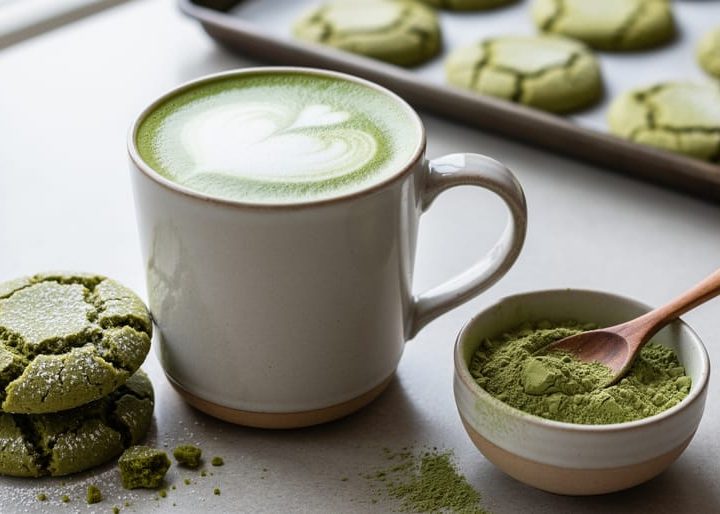
I still remember the first time I tried baking with my ceremonial grade matcha, fully expecting it to taste just like the regular stuff I’d been using. One bite of those cookies, and I realized I’d been missing out on an entirely different experience: creamy, naturally sweet, with zero bitterness. Ceremonial matcha lattes in baked form deliver that same silky richness you love in your favorite drink, but in cookies, scones, and muffins that capture every nuance of premium tea.
The key difference? Ceremonial grade matcha is stone-ground from the youngest, shade-grown tea leaves, giving it a smoother, more delicate flavor than culinary grades. When you bake with it, you’re not just adding green color. You’re infusing your treats with genuine umami depth and that characteristic latte sweetness, minus the grassy bite that cheaper matcha sometimes leaves behind.
Here’s what surprised me most: baking with ceremonial matcha isn’t complicated, but it does require a few adjustments to preserve its quality. Heat can degrade those delicate flavor compounds you paid for, so the recipes I’m sharing today incorporate the matcha at specific stages, use slightly lower temperatures than you might expect, and pair it with ingredients like white chocolate and cream that echo the latte experience.
Whether you’ve invested in a tin of Matcha Mornings ceremonial grade and want to stretch its uses beyond your morning whisk, or you’re a latte devotee looking to capture that café moment in portable form, these three recipes will show you exactly how to translate liquid luxury into something you can hold in your hand.
What You’ll Need: Essential Ingredients and Tools
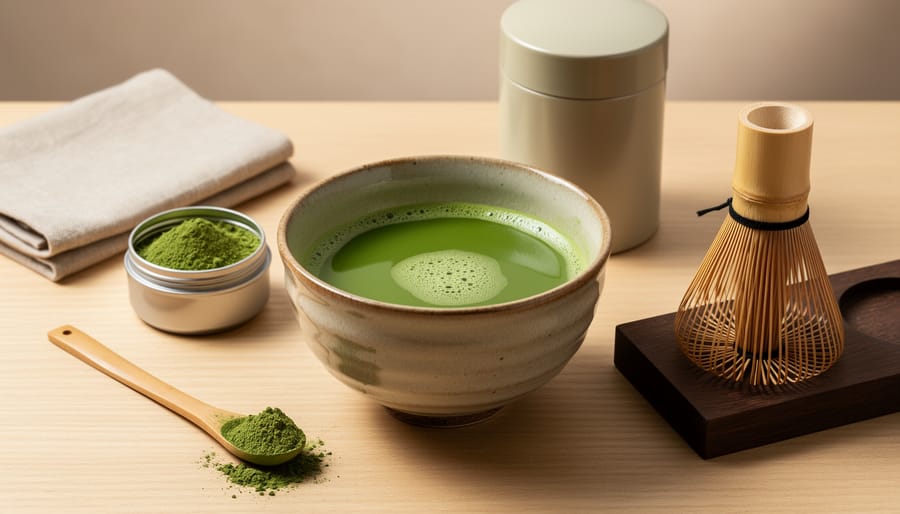
Let me start with the good news: you probably already own most of what you need for these recipes. The ingredient list isn’t fancy or complicated, and the tools are standard baking basics you’d use for any muffin, cookie, or cake project.
The star ingredient, of course, is ceremonial grade matcha powder. This is the bright green, finely milled tea powder traditionally used in Japanese tea ceremonies, and it’s noticeably different from the culinary grade matcha you might find in smoothie recipes. Ceremonial grade has a sweeter, more delicate flavor with virtually no bitterness, while culinary grade tastes grassier and can turn harsh when heated. Since we’re baking these treats at high temperatures, that sweetness and smoothness really matter. Culinary matcha will work in a pinch, but your baked goods won’t have that creamy, latte-like flavor we’re aiming for. Think of it this way: ceremonial matcha tastes like a carefully crafted latte, while culinary tastes more like strong green tea.
Beyond the matcha itself, you’ll need everyday baking staples:
- All-purpose flour (or a 1:1 gluten-free blend if needed)
- Granulated sugar and brown sugar for sweetness and moisture
- Whole milk or your preferred milk alternative (oat milk works beautifully)
- Unsalted butter or coconut oil
- Eggs (or flax eggs for vegan versions)
- Baking powder and baking soda for lift
- Vanilla extract to round out the flavors
- White chocolate chips for two of the recipes
For tools, keep it simple. You’ll use mixing bowls, a whisk or electric mixer, measuring cups and spoons, a fine-mesh sifter (crucial for preventing matcha clumps), and standard baking pans, a muffin tin, a cookie sheet, and a loaf pan. A rubber spatula for folding and a cooling rack complete the setup. Nothing intimidating, nothing specialized. If you’ve baked chocolate chip cookies before, you’re already equipped.
Before You Begin: Tips for Working with Ceremonial Matcha
Before you start mixing batter, let’s talk about protecting your investment. Ceremonial grade matcha costs significantly more than culinary grade, and I’ve watched too many friends waste their beautiful powder through simple mistakes that are completely avoidable.
First, storage matters more than you think. Keep your matcha in an airtight container in a cool, dark place, I store mine in the fridge inside a sealed tin because light and heat destroy those vibrant green chlorophylls and delicate flavors within weeks. Once opened, use it within two months for the best flavor in your baking.
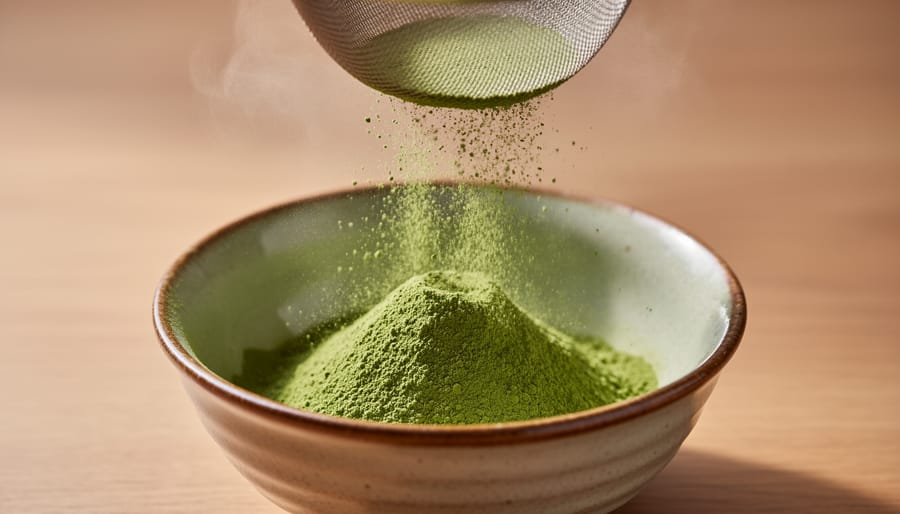
Temperature is your friend and your enemy here. Always sift your matcha powder before adding it to anything. I use a fine-mesh sieve and tap it gently over the bowl, this breaks up clumps that form from the powder’s fine texture and ensures even distribution throughout your batter. Skipping this step means green specks and uneven flavor.
When you’re ready to incorporate matcha into wet ingredients, create a smooth paste first. Take a few tablespoons of your liquid (milk works beautifully) and whisk it with the sifted matcha until completely smooth. This paste method prevents clumping far better than dumping powder straight into batter, and it gives you control over the consistency before committing to the full recipe. Whisk gently but thoroughly, you want it silky, not frothy.
Recipe 1: Ceremonial Matcha Latte Muffins
The Latte-Inspired Twist
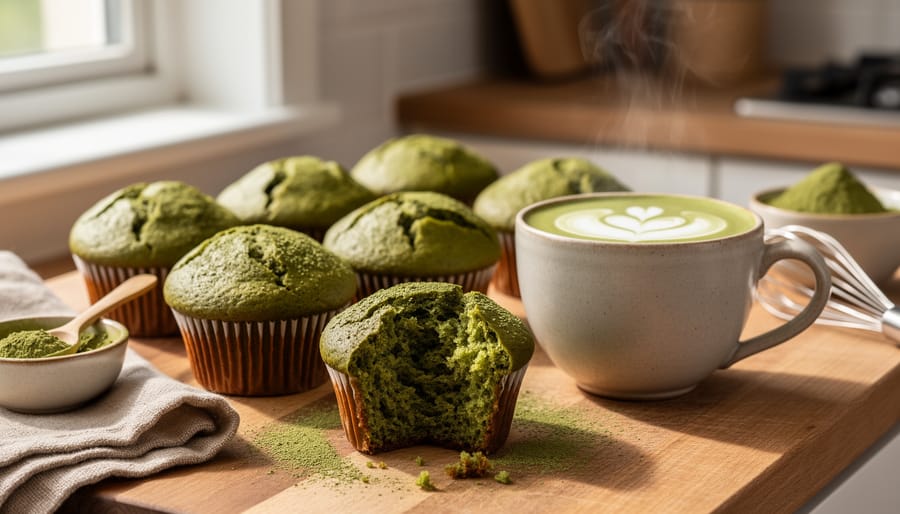
The secret to making these muffins taste like your favorite café drink lies in three key adjustments. First, the milk-to-matcha ratio mimics what a barista would use, about 1 tablespoon of ceremonial matcha to ½ cup of milk or milk alternative in the batter. This creates that signature latte creaminess without overwhelming the delicate matcha flavor.
For sweetness, I keep it gentle. Unlike culinary matcha that needs lots of sugar to balance bitterness, ceremonial grade shines with just enough sweetness to enhance its natural complexity. These muffins use about 30% less sugar than standard recipes, letting the authentic matcha character come through while still tasting like a sweetened latte.
Here’s where it gets fun: adding a teaspoon of instant espresso powder amplifies that café vibe without making the muffins taste like coffee. It deepens the matcha flavor and adds subtle warmth. If you skip it, the muffins are still delicious, just lighter in profile. Following these muffin baking tips alongside these latte-specific techniques ensures you get that perfect tender crumb with genuine matcha latte flavor in every bite.
Recipe 2: Ceremonial Matcha Latte Cookies
These cookies capture everything you love about a matcha latte in a soft, chewy bite. The ceremonial grade matcha shines through without bitterness, and the white chocolate chips add little pockets of sweetness that remind me of that first sip of a perfectly made latte. I’ve made these dozens of times, and they never last more than a day in my house.
Yield: 24 cookies
Prep Time: 15 minutes (plus 30 minutes chilling)
Bake Time: 11 minutes
Start by whisking together 2¼ cups all-purpose flour, 2 tablespoons ceremonial grade matcha powder (sifted), 1 teaspoon baking soda, and ½ teaspoon salt in a medium bowl. Set this aside while you work on the wet ingredients.
In a large bowl, beat ¾ cup softened butter with ¾ cup granulated sugar and ½ cup packed brown sugar until light and fluffy, about 3 minutes. Add 1 large egg, 1 egg yolk, 2 tablespoons whole milk, and 1½ teaspoons vanilla extract. Beat until everything comes together smoothly.
- Add the dry ingredients to the butter mixture in two batches, mixing on low speed just until no flour streaks remain. Don’t overmix or you’ll end up with tough cookies instead of the tender cookie texture you’re after.
- Fold in 1 cup white chocolate chips using a spatula, distributing them evenly throughout the dough.
- Cover the bowl with plastic wrap and refrigerate for 30 minutes. This chilling step is crucial because it prevents the cookies from spreading too thin and helps them stay thick and chewy.
- Preheat your oven to 350°F and line two baking sheets with parchment paper.
- Scoop rounded tablespoons of dough and roll them into balls. Place them 2 inches apart on your prepared sheets because they will spread slightly.
- Bake for 10-12 minutes until the edges just start to set but the centers still look slightly underdone. They’ll appear soft and puffy.
- Let the cookies cool on the baking sheet for 5 minutes before transferring to a wire rack. This finishing time on the hot pan completes the baking without overcooking.
The result is a cookie with crisp edges, a soft center, and that distinctive green color that makes ceremonial matcha so beautiful. The white chocolate melts into sweet streaks that balance the earthy matcha perfectly, creating that latte-like harmony you’re craving.
Recipe 3: Ceremonial Matcha Latte Loaf Cake
Making the Perfect Latte Glaze
The glaze transforms your moist loaf cake into something that genuinely tastes like you drizzled sweetened latte foam over the top. Here’s how to nail it every time.
Sift one tablespoon of ceremonial matcha into a medium bowl. Add two tablespoons of warm whole milk and whisk vigorously until completely smooth with no lumps. This step matters because lumps won’t dissolve once you add the sugar. Gradually whisk in one and a quarter cups of powdered sugar until you have a thick but pourable consistency. The glaze should ribbon off your whisk and hold its shape for a second before melting back into itself.
If it’s too thick, add milk one teaspoon at a time. Too thin? Whisk in more powdered sugar by the tablespoon. For that authentic latte sweetness, add a quarter teaspoon of vanilla extract.
Pour the glaze over your completely cooled loaf in a slow zigzag motion, letting it drip naturally down the sides. Don’t spread it with a spatula or you’ll lose that gorgeous poured effect. The glaze will set within 15 to 20 minutes into a smooth, slightly firm finish that cuts cleanly when you slice.
How to Tell When Your Matcha Bakes Are Perfect
Knowing when your matcha treats are perfectly done takes a bit of practice, but once you understand what to look for, you’ll nail it every time. The biggest giveaway is color: ceremonial matcha should keep its vibrant green hue throughout baking, though it may deepen slightly to a forest green. If your bakes turn muddy brown or olive-drab, they’ve been in the oven too long or at too high a temperature, and that delicate matcha flavor will taste burnt and bitter instead of sweet and grassy.
For texture, the classic toothpick test works beautifully for muffins and loaf cakes: insert a toothpick into the center, and it should come out with just a few moist crumbs clinging to it, not wet batter. Cookies should look slightly underdone when you pull them from the oven since they’ll continue firming up as they cool on the baking sheet. For all three recipes, gently press the top with your fingertip. The surface should spring back slowly, leaving no indent. If it stays sunken, give it a few more minutes.
The flavor test matters just as much as the visual and texture checks. Properly baked ceremonial matcha treats should taste balanced: you get that signature earthy, slightly sweet matcha flavor upfront, followed by the comforting notes of milk and sugar that remind you of a latte. Overbaked matcha turns harsh and astringent, almost like burnt tea leaves, and loses that creamy sweetness entirely.
If your muffins are sinking in the middle, your oven temperature likely ran too hot initially, causing a rapid rise and then collapse. Cracked tops on your loaf cake are totally normal and even charming, but deep crevices mean the oven was too hot. Dry, crumbly texture usually means overbaking, so try reducing your time by two to three minutes next batch and checking earlier.
Storage and Next Steps
Your matcha baked goods stay freshest when stored in airtight containers at room temperature. The muffins and cookies will keep for three to four days, while the loaf cake lasts up to five days thanks to its moisture content. I’ve learned the hard way that leaving these treats uncovered even for a few hours can dull that vibrant ceremonial matcha flavor you worked so hard to preserve.
For longer storage, all three recipes freeze beautifully. Wrap individual portions in plastic wrap, then place them in freezer bags with the air pressed out. They’ll maintain quality for up to three months. When you’re ready to enjoy them, let them thaw at room temperature for an hour or pop them in a warm oven for five minutes to refresh that just-baked taste.
- Store in airtight containers away from direct light to protect matcha’s color and flavor
- Try adding chopped white chocolate or dark chocolate chunks for texture contrast
- Reduce sugar by one-quarter if you prefer less sweetness without losing structure
- Make mini versions by using muffin tins or cookie scoops for smaller, portion-controlled treats
- Experiment with mix-ins like toasted coconut, crushed pistachios, or dried strawberries
Now that you’ve mastered these base recipes, the real fun begins. Swap half the milk in your muffins for coconut cream for a tropical twist, or fold freeze-dried raspberries into your cookie dough. You can even turn the loaf cake into individual cupcakes for easier gifting. Check out more dessert inspiration to spark new flavor combinations that’ll work beautifully with ceremonial matcha’s delicate profile. Trust your instincts and taste as you go, that’s how you’ll discover your signature matcha latte bake.
Your Matcha Baking Questions Answered
I get so many questions about these recipes whenever I share them, and honestly, that tells me you’re thinking like a thoughtful baker. Let me tackle the ones that come up most often.
Can I use regular culinary matcha instead of ceremonial grade?
You can, but the flavor will be much grassier and slightly bitter instead of that sweet, smooth latte taste we’re going for. If you do substitute, reduce the amount by about a third and consider adding an extra tablespoon of sweetener to compensate.
Can I make these recipes dairy-free?
Absolutely! Oat milk works beautifully in all three recipes because it’s naturally creamy and slightly sweet, which mirrors the latte vibe. Almond or soy milk work too, though the texture may be slightly less rich.
Why is my matcha turning brown or olive green?
That’s usually from overbaking or mixing the matcha with ingredients that are too hot. Keep your oven temperature accurate, pull treats out when they’re just done, and let wet ingredients cool to room temperature before adding matcha powder.
How do I make the latte flavor stronger?
Bump up the matcha powder by a teaspoon or add a half-teaspoon of instant espresso powder to the dry ingredients. The espresso won’t make it taste like coffee, it just deepens that cafe experience we’re after.
Can I reduce the sugar in these recipes?
Yes, but cut no more than a quarter of the sugar called for, or your texture will suffer. Remember that ceremonial matcha is delicate and slightly vegetal, so some sweetness actually helps those creamy latte notes shine through.
My muffins spread too much. What happened?
Your butter or oil was probably too warm when you mixed the batter. Room temperature is key, not melted, not cold. Also make sure you’re measuring flour correctly by spooning it into the cup and leveling off, not scooping directly from the bag.
Here’s something I’ve learned from trial and error: most matcha baking problems come down to temperature control and gentle handling. Ceremonial grade is more delicate than the culinary stuff, so rushing or using high heat will wreck that investment you made in quality powder.
The dairy-free question deserves a bit more attention. I’ve tested all three recipes with various milk alternatives, and oat milk consistently gives the closest result to whole dairy milk. It foams nicely in the glaze too. Coconut milk works if you don’t mind a hint of tropical flavor, which actually pairs surprisingly well with matcha. Just avoid anything too watery like rice milk, which throws off the moisture balance.
If you’re adjusting sweetness, taste your batter before baking (if it doesn’t contain raw eggs). That bright green matcha flavor should feel balanced, not vegetal or medicinal. You want to taste matcha first, then sweetness, then a hint of cream. That’s your latte profile right there.
You’ve made it through three delicious recipes, and I hope you’re feeling excited rather than intimidated. The truth is, baking with ceremonial matcha isn’t nearly as fussy as it might seem at first. Yes, it’s a premium ingredient, but that just means it does most of the heavy lifting for you in terms of flavor and color.
I still remember the first time I pulled a batch of matcha latte muffins from my oven. The kitchen smelled incredible, that sweet, earthy aroma filled every corner, and I thought, “I can’t believe I made something this good at home.” That’s exactly what I want for you.
Start with whichever recipe speaks to you most. Maybe it’s the muffins for a weekend breakfast, or the cookies because they’re quick and forgiving. There’s no wrong choice here. And if something doesn’t turn out perfect the first time? That’s completely normal. Even my early attempts had their quirks.
I’d genuinely love to hear how your matcha baking adventures go. Did you tweak a recipe? Discover a favorite? Run into a question I didn’t cover? Your experience matters, and honestly, that’s how we all get better in the kitchen, by trying, sharing, and learning together.
