Planning a cookie giveaway for your bakery on social media? Before you post that exciting announcement, understand that Brazilian law treats certain promotions as regulated gambling activities, and the penalties for non-compliance can shut down your business. Many bakers don’t realize that seemingly innocent Instagram raffles or prize draws fall under strict oversight from SECAP (Secretaria de Avaliação, Planejamento, Energia e Loteria), and navigating these rules through resources like esportebetentrar doesn’t require a law degree.
Brazil’s betting framework distinguishes between legal promotional activities and unauthorized lotteries based on three key factors: whether participants pay to enter, whether winners are determined by chance, and whether prizes have monetary value. The good news? Most bakery promotions can stay completely legal with simple adjustments to their structure.
This guide breaks down exactly when your giveaway crosses into regulated territory, which promotional strategies keep you safely compliant, and how to create engaging campaigns that build your customer base without legal risk. Whether you’re giving away a dozen cupcakes or a custom wedding cake, you’ll learn practical alternatives that generate buzz while respecting Brazilian regulations. We’ll translate complex legal language into baker-friendly terms and provide checklists you can reference before launching any promotion. Your creativity shouldn’t come with compliance anxiety, and understanding these boundaries actually opens up more promotional possibilities than you might expect.
When Does a Giveaway Become ‘Betting’ in Brazil?
The Three Red Flags That Change Everything
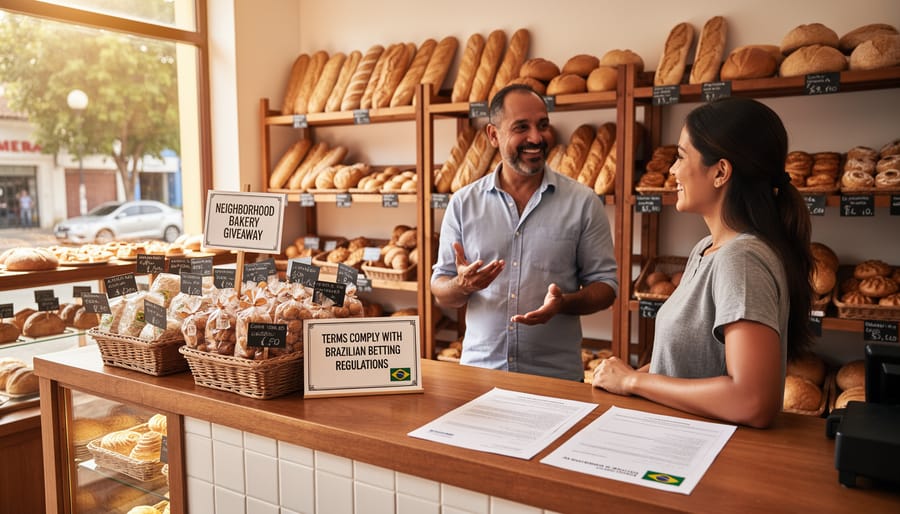
When I first started hosting little giveaways at my home baking business, I had no idea I might be stepping into legal territory. It turns out that Brazilian betting regulations look at three specific elements that can transform your friendly bakery promotion into something requiring government oversight. Let me break these down in a way that makes sense for us bakers.
The first red flag is requiring a purchase. If someone must buy one of your cupcakes or any baked good to enter your giveaway, that’s when regulators start paying attention. It’s the difference between saying “buy a dozen cookies and get entered to win” versus “stop by our shop and fill out an entry form.” That purchase requirement is crucial.
The second element is chance. This means the winner is selected randomly rather than through skill or merit. Think of drawing names from a hat or using a random number generator. When luck determines the outcome, you’re in chance territory. A decorating contest judged on creativity? That’s skill-based and safer. A random drawing among all customers? That involves chance.
The third red flag is prize distribution. This simply means you’re giving away something of value, whether it’s a birthday cake, a month of free bread, or baking supplies. The prize itself completes the trifecta.
Here’s what matters: when all three elements appear together in your promotion, Brazilian law typically considers it regulated gambling. Remove just one of these elements, and you’re usually in the clear. Most home bakers find the easiest fix is eliminating the purchase requirement, allowing free entries alongside purchases. This simple adjustment keeps your promotion fun, legal, and welcoming to everyone.
Safe Giveaway Ideas for Your Baking Business
Recipe Contest Giveaways (Skill-Based)
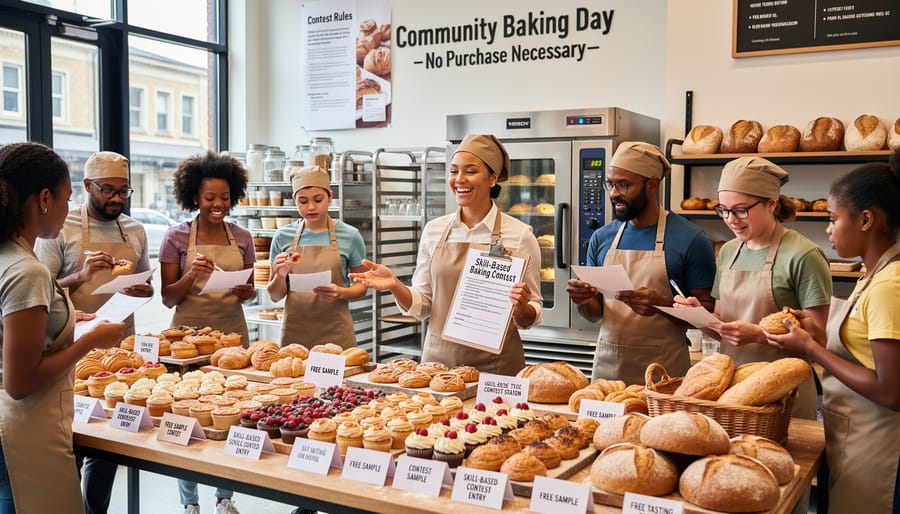
Here’s a wonderful alternative that keeps you firmly on the right side of Brazilian law: skill-based recipe contests! Instead of leaving winners to chance, you’re celebrating creativity and baking skill.
Think of it this way: ask participants to submit their best recipe using a specific ingredient you sell, or challenge them to recreate one of your signature items at home. I once ran a contest asking bakers to create the most creative cookie decoration, and the entries were absolutely stunning! The key is that winners are chosen based on clearly defined judging criteria like taste, presentation, originality, or technique.
To structure this properly, establish transparent rules upfront. Create a panel of judges (you, a local chef, or even community members), outline specific evaluation criteria with point values, and make the selection process merit-based. Document everything! For example, you might judge on creativity (30 points), technical execution (40 points), and presentation (30 points).
These contests typically don’t fall under betting regulations because outcomes depend on participant ability rather than random chance, making them a safe and engaging way to build community around your bakery.
Free Sample Days and First-Come Promotions
Here’s the wonderful news: you can sidestep betting regulations completely with straightforward promotional strategies! Free sample days are your bakery’s best friend. Simply invite customers to try your newest creations without any purchase requirement or entry conditions. I remember setting up a sample table at my local market with mini versions of my signature lemon tarts, and the genuine smiles I received were worth more than any raffle could bring.
First-come promotions work beautifully too. Announce that the first twenty customers on Saturday morning receive a complimentary croissant or cookie. There’s no luck involved, no drawing entries, just pure generosity that rewards your early birds. You could also create “surprise and delight” moments by randomly gifting baked goods to customers throughout the day without any strings attached.
These approaches keep everything transparent and regulation-free because there’s no element of chance or prize competition involved. You’re simply sharing your passion for baking with your community, building loyal relationships one treat at a time. Plus, these genuine gestures often create more buzz through word-of-mouth than complex contests ever could.
Social Media Engagement Without the Risk
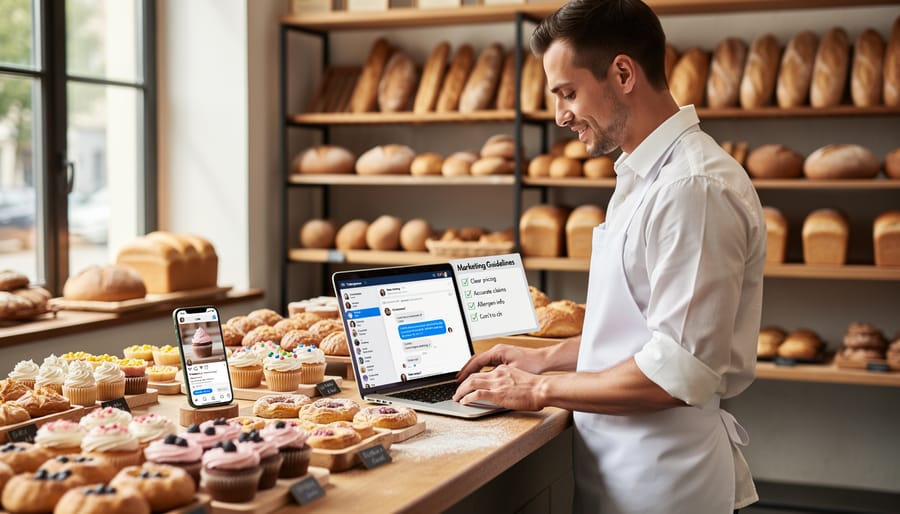
Social media is where most of us naturally connect with customers, and the good news is you can absolutely run engaging promotions there without legal worries. The key is keeping things simple and transparent.
Here’s what works beautifully: Instead of asking people to tag friends for entries or share your post to win, create skill-based challenges. Ask followers to share their best baking story, post a photo of how they’d decorate your signature cake, or answer a fun trivia question about baking techniques. These rely on creativity and knowledge rather than pure luck, which keeps you safely outside betting territory.
When I ran a promotion asking customers to share their favorite family baking memory, the engagement was incredible and completely compliant. You’re inviting participation based on effort, not chance.
Always clearly state your promotion rules upfront. Include who can participate, how winners are selected (your judgment, community vote with visible results, or specific criteria like “most creative answer”), and when you’ll announce results. Keep screenshots of everything for your records.
Remember to avoid requiring purchases to enter and never use random number generators or lottery-style selection methods. Judge entries yourself based on stated criteria, or let your community vote openly. This approach not only keeps you compliant but also builds genuine connection with your followers, which is what social media marketing is really about anyway.
What Brazilian Law Actually Says (In Plain English)
The 2018 Betting Law and Small Businesses
In 2018, Brazil passed significant legislation that changed how betting and games of chance are regulated, and let me tell you, this got a lot of us small business owners scratching our heads! The law primarily aimed at regulating sports betting and online gambling, but here’s where it gets tricky for those of us running bakeries and home-based baking businesses.
The legislation doesn’t specifically target bakery promotions, which is good news. However, it did tighten the overall framework around what’s considered gambling or a lottery activity. For small-scale operations like yours and mine, this means we need to be extra careful about how we structure our customer appreciation events and giveaways.
Think of it this way: if your customers need to purchase something to enter your giveaway, and there’s an element of chance involved (like drawing a name from a hat), you might accidentally be stepping into regulated territory. The 2018 law reinforced that these types of activities could require special permits or licenses that are honestly quite complicated and expensive for small businesses to obtain.
The silver lining? If you’re running a truly free giveaway where no purchase is necessary, or if you’re rewarding customers based on skill or effort rather than random chance, you’re generally in the clear. Home bakers especially need to stay informed because operating without proper business registration and then adding potentially regulated promotional activities could create additional legal headaches you definitely don’t need while perfecting that sourdough starter!
Real Stories: Bakers Who Got It Right (and Wrong)
Let me share some real experiences from our baking community that really bring these regulations to life.
Maria, who runs a small neighborhood bakery in São Paulo, learned an expensive lesson when she organized a “Buy 10 pães de queijo, get entered to win a birthday cake” promotion. She thought it was innocent enough, but a customer complaint led to a visit from local authorities. The problem? She required a purchase for entry, which technically classified it as a lottery under Brazilian law. Maria ended up paying hefty fines and had to shut down her promotion midway through. Her advice now? Always offer a free entry method, even if it’s just filling out a form in the store.
On the flip side, there’s Roberto from Belo Horizonte who got it absolutely right. He wanted to celebrate his bakery’s anniversary with a giveaway but did his homework first. Instead of a raffle, he created a recipe contest where customers could submit their favorite family bread recipe. The winner received baking supplies and got their recipe featured in the bakery for a month. No purchase necessary, no random drawing, just pure community engagement. It was wildly successful and completely legal.
Then there’s the cautionary tale of Café Doce in Rio, who ran an Instagram giveaway requiring followers to tag friends and share posts for entry. Seems harmless, right? But they made one crucial mistake: they called it a “sorteio” (lottery) in their promotional materials, which immediately raised red flags during a routine inspection.
The biggest lesson from all these bakers? When in doubt, focus on contests with skill-based elements rather than chance, always provide free entry options, and be very careful with your promotional language.
Your Simple Checklist Before Launching Any Giveaway
Before you announce your next giveaway on Instagram or tie a lucky ribbon around a box of brigadeiros, let’s walk through a quick safety check together. Think of this as your pre-launch recipe review, but for legal compliance instead of flour measurements.
First, ask yourself: Does anyone need to buy something to enter? If the answer is yes, pause right there. This creates that tricky betting element we discussed earlier. Instead, make purchases give bonus entries while keeping a free entry method available.
Second question: Is the winner determined purely by luck, like a random drawing? Combined with a purchase requirement, this crosses into lottery territory. Consider switching to a skill-based element, even something simple like “best photo of your baked creation” or “most creative flavor suggestion.”
Third checkpoint: Are you clearly communicating the rules? Write them down, even if it feels overly formal for your cozy home bakery vibe. Include how to enter, when the winner is chosen, what the prize includes, and how you’ll notify them. I learned this the hard way when a customer questioned why her entry wasn’t counted—having clear rules saved that relationship.
Fourth: Can you prove your selection method is fair? Screenshot that random number generator, save those judging notes, document everything. Transparency builds trust with your customers.
Finally, when in doubt, keep it simple. “Free sample with every order this week” beats a complicated contest system any day, and your customers will love you just the same.
Here’s the wonderful news: you can absolutely run exciting, memorable promotions for your bakery while staying completely within legal boundaries! I remember when I first learned about these regulations—I felt overwhelmed at first, but then realized they’re actually protecting both bakers and our customers. The key is channeling your creativity into compliant activities rather than risky raffles.
Think about it this way: the most meaningful connections with your baking community don’t come from chance-based giveaways anyway. They come from celebrating your customers’ milestones, hosting fun recipe-sharing events, rewarding loyal supporters with discount codes, and creating contests where everyone’s baking skills shine. These approaches not only keep you safe from legal troubles but also build deeper, more authentic relationships with the people who love your treats.
So take a deep breath and embrace the freedom that comes with following the rules. Your passion for baking and genuine enthusiasm for your community are far more powerful than any raffle could ever be. Stay creative, stay compliant, and keep spreading joy through your delicious creations—without the legal headaches!